 |
|
 |
 |
 |
+ 100 Total Pages |
Read it on All Devices |
+ 1,000 Active Readers |
Book Description |
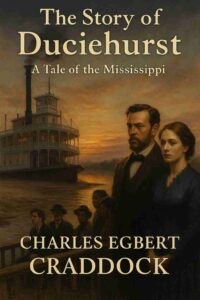
| The Story of Duciehurst: A Tale of the Mississippi by Charles Egbert Craddock is a gripping Southern novel set along the turbulent and majestic Mississippi River. The story revolves around the life of Duciehurst, a fictional plantation and its inhabitants, where wealth, power, and the harsh realities of the 19th-century South collide. The narrative unfolds through the experiences of its central characters, whose lives are shaped by love, ambition, and the complexities of the region’s social and racial dynamics. As the river flows through their lives, it becomes both a symbol of their aspirations and a reminder of the forces that threaten to pull them under. Craddock paints a vivid portrait of the South, highlighting the struggles of those navigating the changes brought by war, family, and societal expectations. |
About Author |
| Charles Egbert Craddock |
|
Charles Egbert Craddock was the pen name of Mary Noailles Murfree (1850–1922), an American writer best known for her vivid and detailed depictions of life in the Appalachian Mountains. Born in Murfreesboro, Tennessee, Murfree suffered from partial paralysis as a child, which led her to focus on literature and storytelling. She began publishing short stories and novels under the male pseudonym Charles Egbert Craddock, as it was difficult for women writers to gain recognition at the time. Her works, including In the Tennessee Mountains (1884) and The Prophet of the Great Smoky Mountains (1885), captured the rugged landscape, dialect, and culture of the Appalachian region with remarkable realism. When she finally revealed her true identity in 1885, it surprised the literary world, as her stories had been widely assumed to be the work of a man. Murfree continued to write until her death, leaving behind a legacy as one of the first authors to bring Appalachian life to mainstream American literature. |