 |
|
 |
 |
 |
+ 100 Total Pages |
Read it on All Devices |
+ 1,000 Active Readers |
Book Description |
|
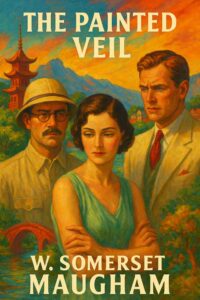
The Painted Veil (1925) by W. Somerset Maugham is a poignant novel of love, betrayal, and redemption set against the backdrop of 1920s China. The story follows Kitty Fane, a shallow and self-absorbed woman trapped in an unhappy marriage with Walter, a reserved and morally upright bacteriologist. When Walter discovers her affair with the charming but unscrupulous Charlie Townsend, he forces her to accompany him to a remote Chinese village ravaged by a cholera epidemic. As Kitty confronts the harsh realities of her situation, she undergoes a profound personal transformation. Amidst the suffering and turmoil, she finds unexpected strength, wisdom, and a deeper understanding of herself and the world around her. Maugham’s exploration of human weakness, the complexities of love, and the possibility of redemption makes The Painted Veil a timeless and deeply moving novel. |
About Author |
| W. Somerset Maugham |
|
W. Somerset Maugham (1874–1965) was a British playwright, novelist, and short story writer known for his sharp wit, keen psychological insight, and mastery of storytelling. Born in Paris and orphaned at a young age, Maugham was raised by relatives in England before studying medicine at St. Thomas’s Hospital in London. Though he qualified as a doctor, he quickly turned to writing, achieving success with his first novel, Liza of Lambeth (1897). Maugham gained international fame with Of Human Bondage (1915), a semi-autobiographical novel exploring themes of love, obsession, and personal growth. His works often depict characters struggling with moral dilemmas, disillusionment, and the complexities of human nature. Some of his best-known books include The Moon and Sixpence (1919), inspired by the life of Paul Gauguin, The Painted Veil (1925), and The Razor’s Edge (1944), which explores Eastern philosophy and the search for meaning. Maugham was also a prolific short story writer, with many of his tales drawing from his extensive travels in Asia, the South Pacific, and Europe. His time working for British intelligence during World War I inspired Ashenden: Or the British Agent (1928), considered one of the first modern spy novels. Critics often noted his clear, unadorned prose, ironic tone, and focus on the darker sides of human ambition and desire. Though not always highly regarded by literary elites, his popularity endured, and he remains one of the most widely read authors of the 20th century. |