 |
|
 |
 |
 |
+ 100 Total Pages |
Read it on All Devices |
+ 1,000 Active Readers |
Book Description |
|
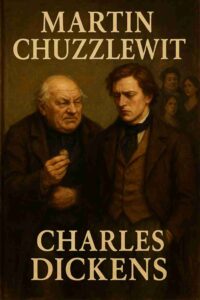
Martin Chuzzlewit is a satirical novel by Charles Dickens, first published in 1843-1844. It explores themes of selfishness, greed, and human nature while offering a sharp critique of Victorian society. The novel centers around Martin Chuzzlewit, a young man who is initially self-centered and ambitious, seeking his fortune while distancing himself from his elderly and wealthy grandfather, old Martin Chuzzlewit. The story follows Martin’s complex relationship with his grandfather, his inheritance, and his eventual personal growth. The novel introduces a wide range of characters, including the conniving, manipulative characters who exploit others for their own gain, as well as those who genuinely embody kindness and integrity. One of the key subplots involves Martin’s time in America, where Dickens satirizes the social and political issues of the United States in the 19th century. The contrast between the selfishness and moral decay in England and the idealistic, yet flawed, American society is central to the book’s critique of society. At its heart, Martin Chuzzlewit is about the transformation of the protagonist. Over the course of the novel, Martin learns the value of selflessness, compassion, and personal responsibility. The work is both a social commentary and a comic tale, filled with Dickens’s signature humor and memorable, eccentric characters. Although it wasn’t as successful during its initial publication, Martin Chuzzlewit has since become appreciated for its rich character development, wit, and Dickens’s exploration of moral themes. |
About Author |
| Charles Dickens |
|
Charles Dickens (1812–1870) was an English novelist, social critic, and one of the most prominent literary figures of the Victorian era. Born in Portsmouth, England, Dickens had a difficult early life, particularly marked by his father’s imprisonment for debt, which led to Dickens working in a factory at a young age. This experience influenced his deep sympathy for the poor and marginalized, which is evident in many of his works. Dickens’s first major success came with The Pickwick Papers (1836–1837), and he continued to produce iconic works throughout his career, including Oliver Twist (1837–1839), David Copperfield (1849–1850), A Tale of Two Cities (1859), and Great Expectations (1860–1861). His novels often addressed social issues such as poverty, child labor, and inequality, and his vivid, memorable characters remain some of the most beloved in English literature. Dickens was also a social reformer and was involved in charity work, often using his writing to advocate for change. His works were published in serialized form, which made them widely accessible and kept readers eagerly awaiting the next installment. |