 |
|
 |
 |
 |
+ 100 Total Pages |
Read it on All Devices |
+ 1,000 Active Readers |
Book Description |
|
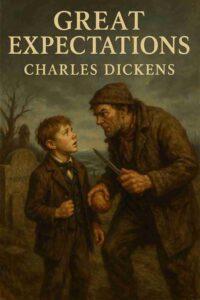
Great Expectations by Charles Dickens, first published in 1861, is a coming-of-age novel that follows the life of Pip, an orphan boy from a poor background who dreams of rising above his social station. The story is set in early Victorian England and explores themes of ambition, social class, and personal growth. Pip’s life changes dramatically when he helps a convict named Magwitch, who later becomes an important figure in his life. Pip is also introduced to the wealthy but eccentric Miss Havisham and her beautiful but cold-hearted ward, Estella, who captures his heart. Over time, Pip learns that he is the beneficiary of a mysterious fortune, which he believes comes from Miss Havisham, and he is trained as a gentleman in London. As Pip grows older, he grapples with the complexities of his newfound wealth, the disillusionment of his expectations, and the realization that true happiness does not lie in social advancement or material wealth. Throughout the novel, he learns important life lessons about humility, loyalty, and the importance of love and human connection. Great Expectations is celebrated for its memorable characters, intricate plot, and moral lessons. Dickens critiques the class system and explores the effects of wealth and ambition on an individual’s character, making it one of his most beloved and enduring works. |
About Author |
| Charles Dickens |
|
Charles Dickens (1812–1870) was an English novelist, social critic, and one of the most prominent literary figures of the Victorian era. Born in Portsmouth, England, Dickens had a difficult early life, particularly marked by his father’s imprisonment for debt, which led to Dickens working in a factory at a young age. This experience influenced his deep sympathy for the poor and marginalized, which is evident in many of his works. Dickens’s first major success came with The Pickwick Papers (1836–1837), and he continued to produce iconic works throughout his career, including Oliver Twist (1837–1839), David Copperfield (1849–1850), A Tale of Two Cities (1859), and Great Expectations (1860–1861). His novels often addressed social issues such as poverty, child labor, and inequality, and his vivid, memorable characters remain some of the most beloved in English literature. Dickens was also a social reformer and was involved in charity work, often using his writing to advocate for change. His works were published in serialized form, which made them widely accessible and kept readers eagerly awaiting the next installment. |