 |
|
 |
 |
 |
+ 100 Total Pages |
Read it on All Devices |
+ 1,000 Active Readers |
Book Description |
|
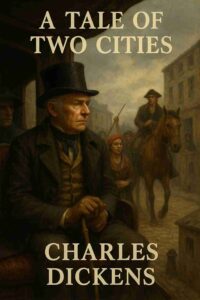
A Tale of Two Cities by Charles Dickens is a historical novel set during the late 18th century, focusing on the events leading up to and during the French Revolution. The story unfolds between London and Paris, highlighting the stark contrasts between the two cities and the chaos brought by revolution. The novel follows Dr. Alexandre Manette, who is released from the Bastille after 18 years of imprisonment and reunites with his daughter, Lucie. Lucie falls in love with Charles Darnay, a French aristocrat who renounces his noble heritage due to the cruelty of his family. Meanwhile, Sydney Carton, a dissolute but intelligent English lawyer who also loves Lucie, finds a purpose in her happiness. As the French Revolution erupts, Darnay returns to Paris to help a friend but is arrested and sentenced to death due to his aristocratic background. In a powerful act of sacrifice, Carton takes Darnay’s place at the guillotine, finding redemption in his selfless act. His final words, “It is a far, far better thing that I do, than I have ever done…” remain one of the most famous lines in literature. The novel explores themes of sacrifice, resurrection, and the impact of political upheaval, making it one of Dickens’s most celebrated works. |
About Author |
| Charles Dickens |
|
Charles Dickens (1812–1870) was an English novelist, social critic, and one of the most prominent literary figures of the Victorian era. Born in Portsmouth, England, Dickens had a difficult early life, particularly marked by his father’s imprisonment for debt, which led to Dickens working in a factory at a young age. This experience influenced his deep sympathy for the poor and marginalized, which is evident in many of his works. Dickens’s first major success came with The Pickwick Papers (1836–1837), and he continued to produce iconic works throughout his career, including Oliver Twist (1837–1839), David Copperfield (1849–1850), A Tale of Two Cities (1859), and Great Expectations (1860–1861). His novels often addressed social issues such as poverty, child labor, and inequality, and his vivid, memorable characters remain some of the most beloved in English literature. Dickens was also a social reformer and was involved in charity work, often using his writing to advocate for change. His works were published in serialized form, which made them widely accessible and kept readers eagerly awaiting the next installment. |