 |
|
 |
 |
 |
+ 100 Total Pages |
Read it on All Devices |
+ 1,000 Active Readers |
Book Description |
|
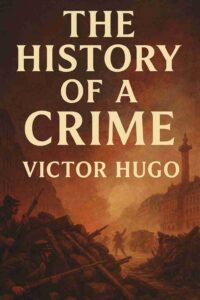
The History of a Crime (1877) by Victor Hugo is a political and social commentary that recounts the events surrounding the coup d’état of December 2, 1851, when Napoleon III seized power in France, effectively ending the French Second Republic. Written as both a personal reflection and a historical account, Hugo passionately condemns the actions of Napoleon III and the violent overthrow of democracy. The book is a detailed narrative of the political crisis, documenting the suffering of the French people and Hugo’s firm opposition to the authoritarian regime that followed. Hugo, who was in exile during the coup, uses this work to offer a moral critique of tyranny and the abuse of power, emphasizing the importance of democracy and the rule of law. The History of a Crime not only serves as a historical document but also as an impassioned plea for justice and freedom, written with Hugo’s characteristic eloquence and dedication to human rights. |
About Author |
| Victor Hugo |
|
Victor Hugo (1802–1885) was a French writer, poet, and playwright, best known for his monumental works Les Misérables and The Hunchback of Notre-Dame. He was a leading figure in French Romanticism and a major influence on literature, both in France and internationally. Hugo’s works are characterized by their deep empathy for the poor and oppressed, as well as their exploration of social justice, morality, and the human condition. Born in Besançon, France, Hugo began his literary career with poetry and later moved into novels and plays. His early works embraced the Romantic ideals of individualism, emotion, and rebellion against social norms. The Hunchback of Notre-Dame (1831), his first major novel, is set in medieval Paris and explores themes of love, obsession, and societal outcasts through the tragic figure of Quasimodo, the bell ringer of Notre Dame Cathedral. However, it was Les Misérables (1862) that solidified Hugo’s place in literary history. This epic novel spans several decades and follows the lives of several characters, most notably Jean Valjean, a former convict trying to redeem himself, and Javert, the unrelenting inspector pursuing him. The novel is both a social critique and a moral exploration of grace, justice, and redemption. In addition to his literary career, Hugo was also a political figure and a champion of human rights. He was an outspoken critic of the French monarchy, an advocate for the abolition of the death penalty, and a defender of civil liberties. Hugo’s works have been translated into numerous languages, adapted into films, plays, and musicals, and remain widely read today for their profound moral insights, unforgettable characters, and vivid depictions of society. |