 |
|
 |
 |
 |
+ 100 Total Pages |
Read it on All Devices |
+ 1,000 Active Readers |
Book Description |
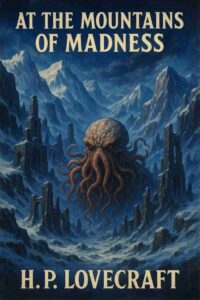
| At the Mountains of Madness (1936) by H.P. Lovecraft is a chilling science fiction horror novel set in the icy expanse of Antarctica. The story is narrated by Dr. William Dyer, a professor at Miskatonic University, who embarks on an expedition to the uncharted regions of the Antarctic. What begins as a scientific mission soon turns into a nightmare as the team uncovers the remains of an ancient, alien civilization buried beneath the ice. As they venture deeper into the mountains, they discover horrifying secrets that challenge their understanding of the universe and their place in it. The novel is renowned for its atmosphere of creeping dread, cosmic horror, and the terrifying revelation of beings far older and more powerful than humanity. |
About Author |
| H. P. Lovecraft |
|
H.P. Lovecraft (Howard Phillips Lovecraft) was an American writer, born on August 20, 1890, in Providence, Rhode Island. He is best known for his pioneering contributions to the horror genre, particularly through his creation of what is now known as “cosmic horror.” Lovecraft’s works explore themes of forbidden knowledge, the insignificance of humanity in the face of a vast and uncaring universe, and encounters with ancient, malevolent entities. Lovecraft’s writing was heavily influenced by his fascination with the unknown, the occult, and science, and he often incorporated these themes into his stories. He created a shared fictional universe, known as the “Cthulhu Mythos,” where ancient deities like Cthulhu, Nyarlathotep, and Yog-Sothoth exist beyond human comprehension, often wreaking havoc on those who dare to uncover their secrets. Although Lovecraft’s works gained little recognition during his lifetime, they have since become hugely influential in horror literature, inspiring countless writers, filmmakers, and artists. His influence can be seen in the works of authors like Stephen King and Neil Gaiman. Lovecraft passed away on March 15, 1937, but his legacy as one of the most significant writers of weird fiction and horror endures to this day. |