 |
|
 |
 |
 |
+ 100 Total Pages |
Read it on All Devices |
+ 1,000 Active Readers |
Book Description |
|
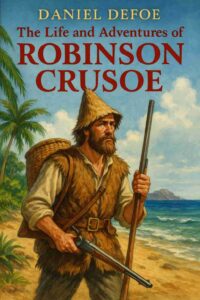
The Life and Adventures of Robinson Crusoe by Daniel Defoe is a groundbreaking adventure novel that follows the story of Robinson Crusoe, a mariner who is shipwrecked on a deserted island. After surviving a violent storm and the shipwreck that follows, Crusoe must learn to live alone, adapting to the island’s environment while seeking ways to survive. Over the course of 28 years, Crusoe faces numerous challenges, including isolation, scarcity, and the appearance of a native man, whom he names Friday. Through his resourcefulness, perseverance, and a strong sense of faith, Crusoe transforms his life on the island. This novel is widely regarded as one of the first of its kind, introducing themes of self-reliance, survival, and exploration. Crusoe’s story touches on human nature, isolation, and the desire for adventure, making it a timeless tale of courage and resilience. |
About Author |
| Daniel Defoe |
|
Daniel Defoe (c. 1660–1731) was an English writer, journalist, and pamphleteer, best known for his novel Robinson Crusoe (1719), often considered one of the first English novels. Born in London, Defoe came from a family of dissenters, and he initially pursued business and political writing, notably engaging in pamphlets that often reflected his political and social opinions. His early life was marked by financial struggles and several ventures that did not succeed, including a failed business and imprisonment for writing against the government. Defoe’s literary career flourished when he turned to fiction, blending adventure, satire, and realism in his novels. Robinson Crusoe tells the story of a man stranded on a deserted island and is considered a precursor to the modern adventure genre. His other famous works include Moll Flanders (1722), a story of a woman’s life of crime and survival, and A Journal of the Plague Year (1722), a fictional account of the 1665 plague in London. Defoe’s works often focused on themes of survival, individualism, and the complexities of human nature. His writing was influential, and his works continue to be celebrated for their realism and social commentary. |