 |
|
 |
 |
 |
+ 100 Total Pages |
Read it on All Devices |
+ 1,000 Active Readers |
Book Description |
|
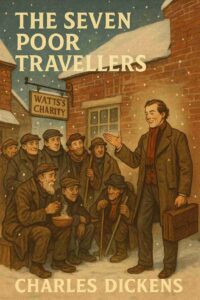
The Seven Poor Travellers by Charles Dickens is a short Christmas story first published in 1854 as part of his seasonal collection, Household Words. The story is set in Rochester, England, and follows a traveler (the narrator, resembling Dickens himself) who stops at a charitable inn known as Watts’s Charity, which provides food and shelter to six poor travelers. On Christmas Eve, the narrator shares a meal with the travelers and listens to their stories. He then tells them a tale of a brave young soldier who, despite hardships and struggles, remains honorable and kind. The story blends realism with sentimentality, emphasizing themes of charity, goodwill, and the power of storytelling. Like many of Dickens’s Christmas tales, The Seven Poor Travellers highlights the spirit of generosity and human kindness, reinforcing the idea that even the poorest individuals deserve dignity and compassion. |
About Author |
| Charles Dickens |
|
Charles Dickens (1812–1870) was an English novelist, social critic, and one of the most prominent literary figures of the Victorian era. Born in Portsmouth, England, Dickens had a difficult early life, particularly marked by his father’s imprisonment for debt, which led to Dickens working in a factory at a young age. This experience influenced his deep sympathy for the poor and marginalized, which is evident in many of his works. Dickens’s first major success came with The Pickwick Papers (1836–1837), and he continued to produce iconic works throughout his career, including Oliver Twist (1837–1839), David Copperfield (1849–1850), A Tale of Two Cities (1859), and Great Expectations (1860–1861). His novels often addressed social issues such as poverty, child labor, and inequality, and his vivid, memorable characters remain some of the most beloved in English literature. Dickens was also a social reformer and was involved in charity work, often using his writing to advocate for change. His works were published in serialized form, which made them widely accessible and kept readers eagerly awaiting the next installment. |