 |
|
 |
 |
 |
+ 100 Total Pages |
Read it on All Devices |
+ 1,000 Active Readers |
Book Description |
|
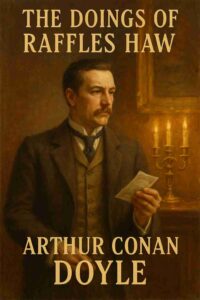
The Doings of Raffles Haw is a novel by Arthur Conan Doyle, first published in 1891. It is a thought-provoking story that explores themes of wealth, morality, and the impact of unlimited riches. The novel follows Raffles Haw, a mysterious and immensely wealthy man who settles in a small English town. He aims to use his fortune for the benefit of others, believing that money can solve all problems. However, as he distributes his wealth, he encounters greed, corruption, and unexpected consequences. Rather than bringing happiness, his generosity leads to discord and tragedy. Through this tale, Doyle examines the idea that wealth alone cannot bring true fulfilment or social harmony. The Doings of Raffles Haw is a fascinating mix of philosophical reflection and engaging storytelling, offering a unique perspective on the burdens of great fortune. |
About Author |
| Arthur Conan Doyle |
|
Sir Arthur Conan Doyle (1859–1930) was a British writer, physician, and creator of the legendary detective Sherlock Holmes. Born in Edinburgh, Scotland, he studied medicine at the University of Edinburgh, where he began writing stories in his spare time. Doyle gained worldwide fame with A Study in Scarlet (1887), the first novel featuring Sherlock Holmes and Dr. John Watson. His detective stories, including The Adventures of Sherlock Holmes and The Hound of the Baskervilles, became some of the most influential works in crime fiction. Beyond Holmes, Doyle wrote historical novels, science fiction, and supernatural tales. He was also deeply involved in spiritualism later in life. Despite trying to move beyond his detective stories, Holmes remains his most enduring legacy, shaping modern mystery fiction. |